 info@photosint.eu


María Tripiana is the coordinator of the project PHOTOSINT. In this interview, María provided her point of view of the project advances and future outcomes.
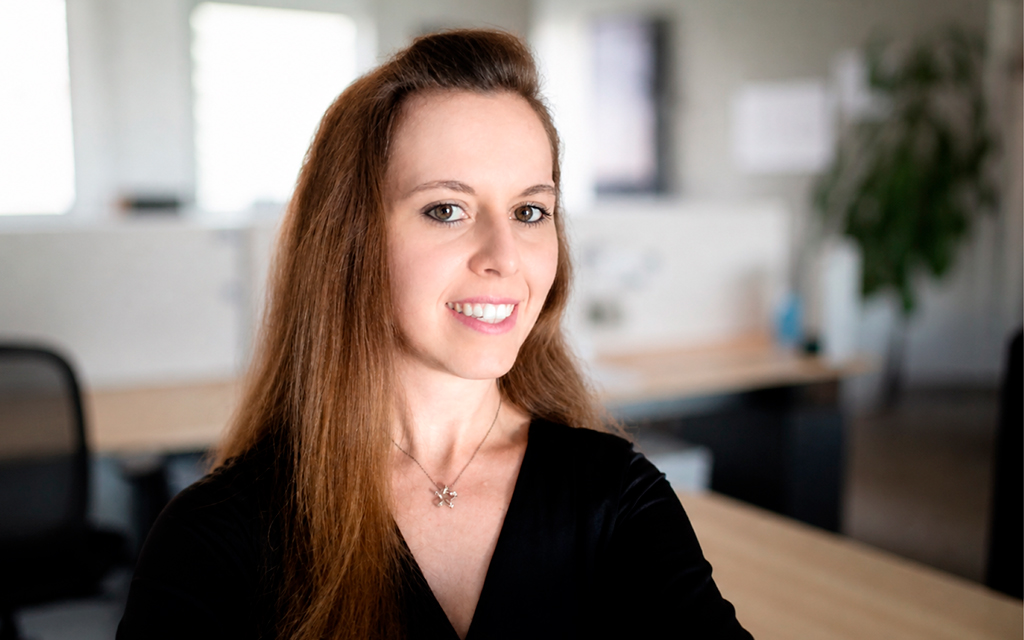
María Tripiana is the coordinator of the project PHOTOSINT. She currently exercises as the Manager of the Chemical Applications Division in IDENER. María has more than ten years of experience in research and innovation, including roles such as technical researcher, R&D project manager and team leader. In this interview, María provided her point of view on the project advances and future outcomes.
Interviewer (Q): What Partner do you represent in the Consortium? Could you briefly describe the contribution of your institution to the project?
María (M): I represent IDENER. Our core activity is the development of computational science tools for systems optimisation. We also develop algorithms for applying artificial intelligence and machine learning within these optimisations.
Also, we are a very active institution in the Horizon Europe framework. We write, participate and coordinate proposals. In the case of PHOTOSINT, apart from the coordination role, we lead the WP related to process modelling and multidisciplinary design optimisation, and we also carry out tasks for the process validation and replication.
(Q): What specific role do you play as project coordinator? What responsibilities do you have, and what does it mean for you to coordinate PHOTOSINT?
(M): As coordinators, we monitor the project implementation according to the Grant Agreement and the Consortium Agreement rules. That means that we are also an intermediary figure between the European Commission and the consortium of partners. We also have the responsibility for the financial and administrative management of the project.
It is important to accompany, support and guide partners during the project, helping them keep in mind the overall scope of the project and the final objectives. They are going to be focused on very specific tasks, which makes it easy to sometimes turn from this general view of the project.
(Q): In a few words, what is the added value of PHOTOSINT? What is its main goal?
(M): The main goal in PHOTOSINT is to deliver a sustainable process to produce energy vectors such as H2 and methanol using sunlight as an energy source and wastewater and CO2 as feedstock. This is going to make industries more self-sufficient in their daily activities.
(Q): In general terms, what have been the biggest scientific or technical highlights during the first half of the project?
(M): During the first half of the project, the work has been mainly focused on the definition of electrode materials and catalyst devices. The core of the system is a photoelectrochemical cell in which the catalytic reactions take place. That is the reason why setting the basis of the design and development of the electrochemical devices has been so important during the mentioned period.
Other interesting advances have been made in the photoelectrochemical cell system configuration, in the photovoltaic cell device and the auxiliary equipment.
(Q): What can you tell me about the main challenges PHOTOSINT is currently facing, and what about the foreseen challenges that are about to come?
(M): As for the main challenges currently being faced, I would say that the integration and implementation of the system in the industrial partners' facilities is probably the largest one. And as for future challenges, the equipment must be delivered, assembled and tested in the industrial partner's facilities. This logistics is complex and it will require extremely good coordination among the partners and timings. It will be crucial to define needs beforehand in order to avoid delays.
(Q): In your opinion, what are the main challenges in integrating renewable energy sources into heavy industry? Can any of them be applied specifically to PHOTOSINT?
(M): Industry has its own way of doing things, and it works very well. Normally, emerging technologies are not technically and economically competitive at their early stages and that is probably the main blocker. Also, renewable energy is not as stable as energy produced from conventional sources, which makes industrial partners more reticent about innovation in energy systems. In the case of PHOTOSINT, the advantage is that solar energy can be stored in batteries to be used later. Besides, the PHOTOSINT technology can be gradually adapted in the processes, meaning that no complete substitution of the conventional process is needed.
(Q): How do you envision PHOTOSINT technologies being adopted by industry after the project ends? Will industry be interested?
(M): I hope so! We are going to validate the PHOTOSINT technology at two partners' facilities (Steklarna in Slovenia and Torrecid in Spain), so I think that it will give the industry solid proof of concept, making PHOTOSINT a reliable and promising technology. So, eventually our developments could be properly benchmarked.
(Q): Not only as a coordinator but as a technical expert, how do you think the sustainability of the project’s innovations across environmental, economic, and social dimensions could be optimally assessed?
(M): The main impact we expect from PHOTOSINT is to achieve a more efficient, clean, sustainable, secure and competitive energy supply through energy systems based on renewable energy solutions. Besides, the availability of this kind of disruptive renewable technology will accelerate the replacement of fossil-based energy technologies. We can say that the PHOTOSINT project also considers the social, economic and environmental aspects aligned with the Green Deal priorities, targeting groups such as end users in the chemical sector, environmental consulting, engineering companies, NGOs and government authorities. This is the theoretical approach, of course, and it is difficult to measure. That is precisely why we want to work on the validation in the second half of the project: to assess these aspects properly and to be able to report relevant results that can support these assumptions in a quantitative and qualitative way.
(Q): From all your inputs, it can be seen that the participation of industrial partners is considerably important for the validation of the technology. But, what about the academic and research participants considering the “elemental science” needed for the catalysts design and development?
(M): The role of all partners is crucial. We need to know industrial partners’ needs so we can think of solutions that can be later validated in their facilities. Besides, academic and research institutions work on the basis of improving the design and methodology. That is what is going to make the difference.
(Q): How do you balance the scientific, managerial, and collaborative aspects of the project?
(M): I am not going to lie, this is very complex. The secret is in keeping in mind the global idea and the final objectives. Having this high-level vision will enable us to succeed in the project. In the consortium, we are working with different types of partners who are going to be focused on specific parts of the project. So helping them to be aligned with this general vision is providing them with the best tool for an integrated approach.