 info@photosint.eu


Testing is a critical step in transforming innovative laboratory concepts into technologies with potential for industrial application. A recent report from the Institute of Chemical Research of Catalonia brings together the results of testing several prototype devices developed to produce renewable hydrogen and methanol using water, carbon dioxide and renewable energy.
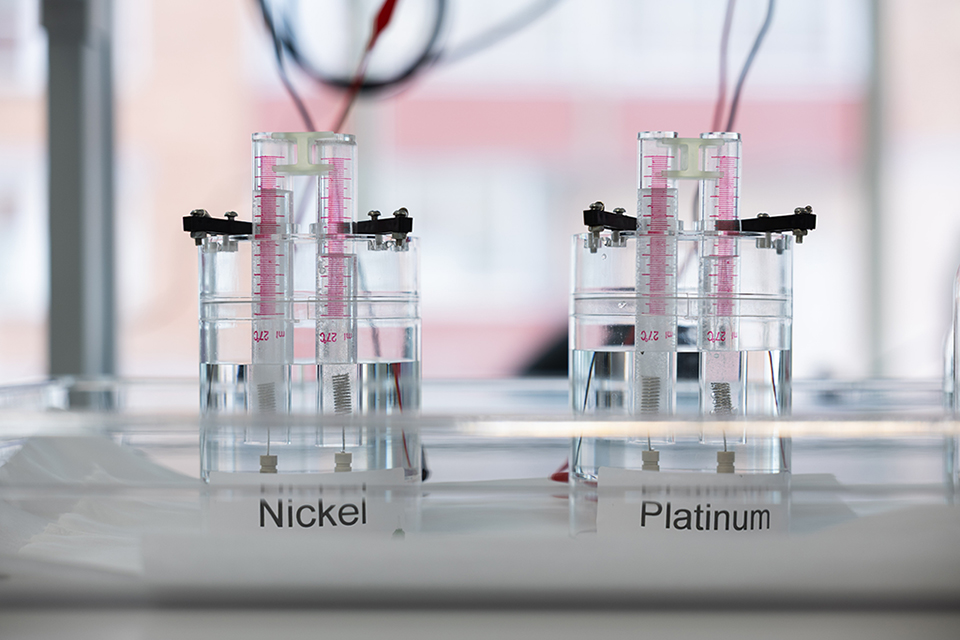
The testing programme was designed to assess the performance, durability and reliability of the prototypes, while also identifying areas where their materials and operating conditions could be improved. The results provide an important foundation for the next stage of PHOTOSINT, in which the most promising configurations will progress towards larger-scale testing and integration with solar energy systems.
Putting the PHOTOSINT Prototypes to the Test
The prototype systems were assessed through a series of experiments designed to understand how they perform under increasingly realistic operating conditions. The PHOTOSINT devices were compared with established and commercially available systems, providing useful benchmarks against which their performance could be evaluated.
The tests also considered conditions relevant to future industrial deployment, including the use of water and gas streams representative of those that could be encountered in real applications. Extended operation was particularly important, allowing the consortium to identify issues that may not become apparent during short laboratory experiments, such as corrosion, leakage, blockages or declining performance.
This iterative approach enabled the team not only to assess the prototypes, but also to use the results to improve their design and operating conditions.
Strong Performance and Clear Potential
The testing produced encouraging results for the PHOTOSINT technology. In several experiments, the project prototypes achieved performance comparable with, and in some cases exceeding, established commercial reference devices. In hydrogen production tests, for example, the PHOTOSINT prototype demonstrated performance comparable to an established industry-standard system.
These results provide valuable evidence that the technologies developed within the project can compete with existing approaches at the prototype level, while also identifying the areas that require further development before larger-scale deployment.
Improving Durability Through Better Materials
One of the important lessons from the testing programme was the need to ensure that all components can withstand prolonged operation. Early experiments identified corrosion affecting some components of the prototype systems, highlighting a potential barrier to long-term reliability.
The consortium responded by replacing the affected components with pure nickel. This material change improved resistance to corrosion and contributed to the development of a more robust and durable system. Such findings demonstrate why extended testing is essential: performance under initial laboratory conditions is only one part of determining whether a technology can ultimately operate reliably in an industrial environment.
Improving Methanol and Hydrogen Production
The testing programme also demonstrated the importance of catalyst selection and electrode design in determining fuel production performance. By optimising the materials used within the systems, the consortium was able to increase the efficiency of methanol and hydrogen production.
In one example, the introduction of an improved catalyst configuration increased methanol production efficiency from approximately 9.5% to 13%. Further improvements were achieved by addressing the physical conditions inside the device.
The team introduced polytetrafluoroethylene (PTFE) and adjusted operating pressure to tackle issues associated with leakage and clogging. Under specific test conditions, these changes contributed to an increase in methanol production from approximately 1% to 14.5%.
These results highlight how apparently small changes to materials and operating conditions can have a significant effect on overall system performance.
Finding the Right Balance
The testing has also shown that there is no single factor that determines the performance of the prototypes. Instead, the amount and type of catalyst, operating pressure and the design of the individual components must work together to create the right conditions for efficient fuel production.
Understanding these interactions is particularly important as PHOTOSINT moves towards larger-scale systems. Conditions that work well in a small laboratory device may not automatically translate to a larger system, making the knowledge gained through prototype testing essential for the next stage of development.
Preparing for the Next Stage
The results from the report provide an important basis for selecting the most promising materials, components and operating configurations for further development. The improvements made during testing have addressed several challenges related to durability, leakage, clogging and fuel production performance, strengthening the prototypes' potential for future scale-up.
The next phase will focus on integrating the improved technologies with photovoltaic systems and testing them under outdoor conditions and real sunlight. This will provide an important opportunity to assess how the complete system performs when the individual components are brought together and operated as an integrated solar fuel production platform.
Moving Solar Fuel Technology Closer to Application
The prototype testing carried out within PHOTOSINT demonstrates the value of an iterative approach to technology development. Each testing cycle has provided new insights that have been used to refine materials, improve system design and optimise operating conditions, bringing the technology closer to practical application.
While further testing and scale-up are still required, the results represent an important step towards PHOTOSINT's goal of developing integrated technologies for renewable hydrogen and methanol production. By combining improved durability with stronger fuel production performance, the project is laying the groundwork for the next generation of solar-driven fuel systems.