 info@photosint.eu


As Europe accelerates its transition towards a climate-neutral economy, hydrogen is increasingly recognised as one of the key building blocks of a future low-carbon energy system.
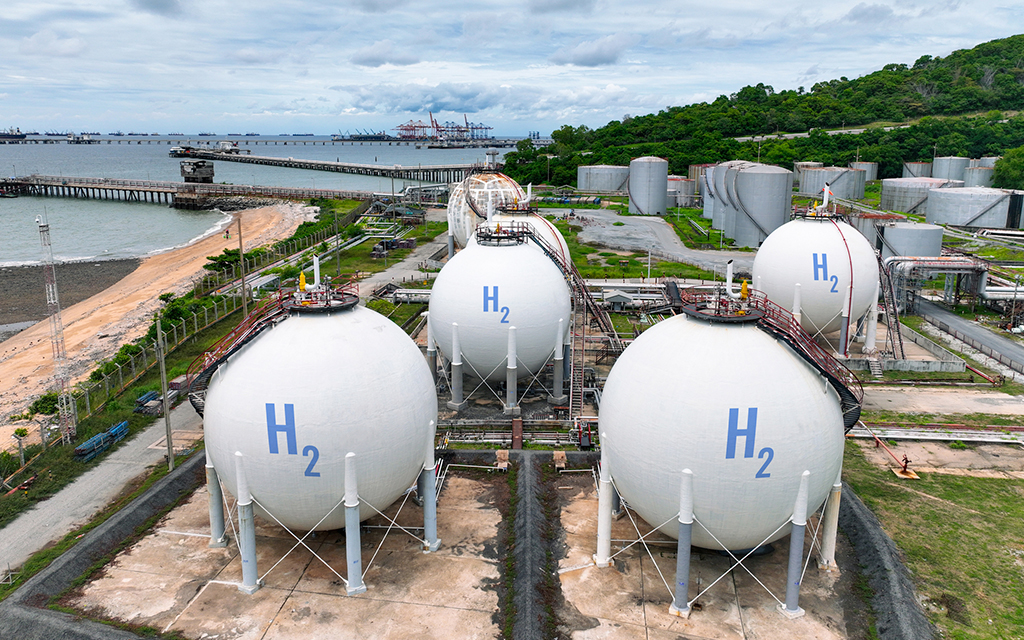
Its ability to store and transport renewable energy makes it a promising solution for decarbonising industries, supporting energy security, and reducing dependence on fossil fuels. Yet one significant challenge remains: how can hydrogen be stored safely, efficiently, and economically at the scales required for widespread adoption?
This question lies at the heart of a recent PHOTOSINT report dedicated to evaluating hydrogen storage technologies and their potential role in future industrial applications which provides valuable insights into one of the most important aspects of building a sustainable hydrogen economy.
Why Hydrogen Storage Matters
Producing renewable hydrogen is only part of the challenge. To become a practical energy carrier, hydrogen must also be stored and transported in ways that preserve its value while maintaining safety and cost-effectiveness.
The choice of storage technology can significantly influence the overall performance, environmental footprint, and economic viability of hydrogen-based systems. For this reason, identifying the most suitable storage solutions is essential for moving hydrogen technologies from demonstration projects towards large-scale industrial deployment.
Within PHOTOSINT, this work supports the broader objective of integrating advanced hydrogen technologies into industrial processes and preparing them for future scale-up activities.
Exploring Different Storage Pathways
Hydrogen can be stored using a variety of approaches, each offering distinct advantages and challenges depending on the intended application.
Alongside these established technologies, significant research is being devoted to material-based storage solutions. These approaches store hydrogen within solid materials or chemical compounds, potentially offering higher storage densities and enhanced safety characteristics.
Examples include:
- Metal hydrides that absorb and release hydrogen under controlled conditions.
- Advanced porous materials capable of storing hydrogen within their internal structures.
- Chemical carriers such as ammonia and liquid organic hydrogen carriers (LOHCs), which enable hydrogen transport through existing infrastructure networks.
These emerging solutions could play an important role in future hydrogen value chains, although many still require further development before reaching widespread commercial adoption.
Evaluating Performance Beyond Storage Capacity
A key message emerging from the PHOTOSINT assessment is that selecting a hydrogen storage solution involves much more than simply maximising storage capacity.
Each technology was evaluated through a comprehensive framework that considered multiple factors, including:
- Technological maturity and readiness for deployment.
- Energy efficiency and operational requirements.
- Safety and environmental performance.
- Economic viability and lifecycle costs.
- Suitability for different industrial applications and scales.
This holistic perspective recognises that successful hydrogen deployment depends on balancing technical performance with practical and economic realities.
Finding the Right Solution for the Right Application
One of the most important conclusions of the assessment is that there is no single storage technology capable of meeting every need.
Instead, the suitability of a particular solution depends on the operational context. For smaller-scale applications and laboratory environments, compressed gaseous hydrogen currently offers the most practical and cost-effective option. Its maturity, relatively low investment requirements, and established safety procedures make it a strong candidate for near-term deployment.
For applications where safety, long-duration storage, or space constraints are critical considerations, material-based solutions such as metal hydrides show significant promise. Although these systems may require higher initial investment and careful thermal management, they offer advantages that could become increasingly valuable in specialised industrial settings.
At the same time, ongoing research into advanced materials and chemical carriers continues to expand the range of possibilities available for future hydrogen storage systems. These innovations may ultimately unlock new opportunities for integrating renewable hydrogen into existing industrial and energy infrastructures.
Supporting Future Industrial Deployment
The findings generated through this work provide an important foundation for the next stages of PHOTOSINT. By assessing the strengths and limitations of different storage technologies, the project can make informed decisions regarding the design and integration of hydrogen storage systems within future pilot-scale demonstrations.
Beyond the project itself, the study contributes to a broader understanding of how hydrogen technologies can be deployed effectively across different industrial sectors. The results reinforce the importance of tailoring storage solutions to specific operational needs while carefully considering safety, sustainability, performance, and cost.
Looking Ahead
Hydrogen is expected to play a central role in Europe's clean energy transition, but achieving this vision will require continued innovation across the entire value chain. Storage technologies will be a critical component of this effort, enabling renewable hydrogen to be produced, transported, and utilised wherever it is needed.
By evaluating both established and emerging storage approaches, PHOTOSINT is helping to build the knowledge base needed for the next generation of hydrogen systems. As research and development continue, these insights will support the creation of more efficient, reliable, and scalable solutions capable of accelerating industrial decarbonisation and supporting a sustainable energy future.